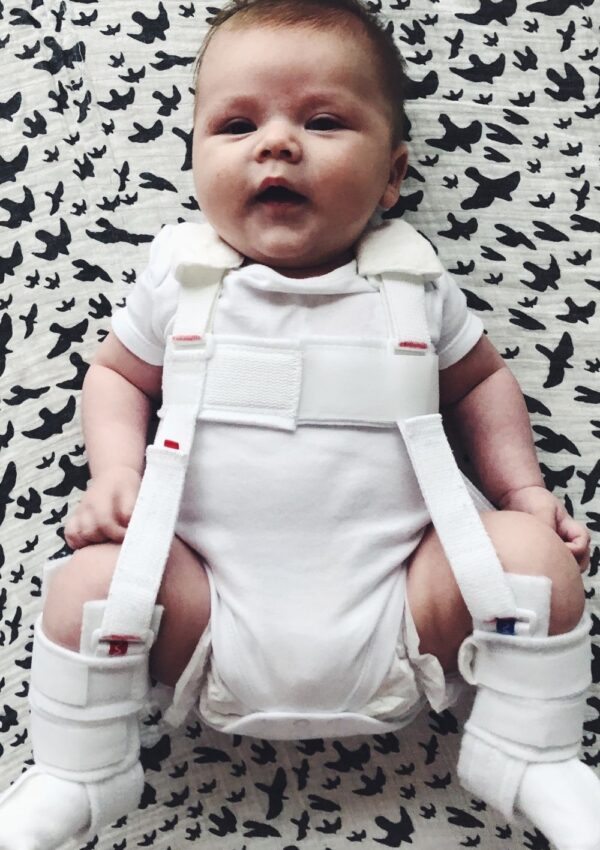
If you’ve read my blogs previously you’ll know and I’m pretty obsessed with all stuff hip health. You might also know that carrying my son in the correct position in his Ergo Baby Carrier was instrumental in maintaining his hip treatment progress. In today’s post I’ll show you how to carry a baby with hip dysplasia.
If you’d like to read more about our hip dysplasia journey, this post is a great place to start- Our hip dysplasia journey- from double nappies to the Pavlik harness – Flicks and Red Lips
Babywearing safely
Thanks to Ruth from local business Carrying Connects, I was able to learn the skills to safely hip and back carry from a professional. Please note, Ruth gifted her service to me, but there was no obligation for me to post.
There is countless videos on YouTube, but nothing beats someone teaching you the steps first hand and assisting you if you go wrong. Carrying incorrectly is not only bad for your back, but could even be dangerous for little one too. Especially if they have been diagnosed with hip dysplasia.
I’d presumed that carrying on my hip or back would be much trickier than on my front, but I couldn’t of been more wrong. Ruth made it all so easy, with a few simple directions. Beginning in a chest facing carry position, a few shuffles and minor manoeuvres, and baby is safely in their new position.

How to carry a baby with hip dysplasia- forward facing?
There are very few carriers that support a babies hips in a forward facing position. In fact, the only range that was recommended to me is Ergo Baby, whose carriers maintain the same hip position in a forward or chest facing wear.
Remember that whether you’re front or parent facing, babies knees should be higher than their bottom, which should be sat deep in the bucket seat.
You can see my favourite from the Ergo Baby range here- Ergo Baby
If you aren’t sure about the positioning of yours, visit a sling consultant for a visual check.

What do you need to watch out for?
Like a chest facing carry, there is a few things to watch out for- TICKS.

Also, remember that the safest way for babies hips is to ensure they are supported from knee to knee in the M position, as you can see below.

I hope you’ve found this post helpful, and it’s given you more of an insight into how to carry with baby with hip dysplasia.
Sian x


Thank you for your kind words Sian, it is always a pleasure to share the carrying love! I hope that you enjoy many more years of carrying Ace! And thank you for doing my makeup 🙂